
PSLE English Composition Topics: 8 Original Picture Prompts
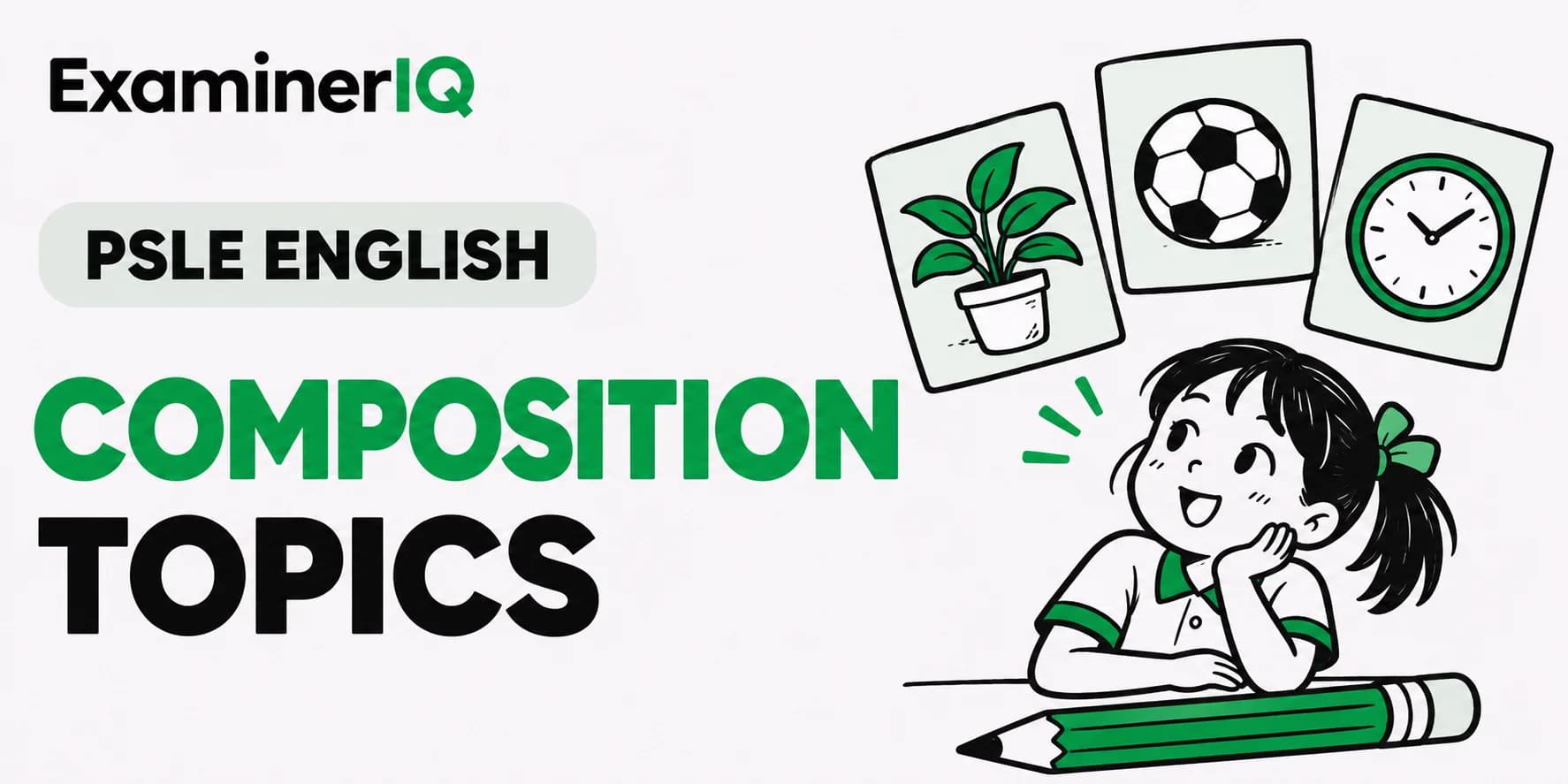
Useful PSLE composition topics give you a situation to explore, a choice for your character and a reason for the ending. Start by choosing a picture that helps something happen in the story. Then decide how the character's actions will make the topic clear.
The eight topics below are original practice exercises, with three picture ideas for each. They are not past examination questions or predictions. The first set is illustrated; you can sketch the remaining picture ideas or use their descriptions when practising. Each topic includes a planning question and a specific mistake to watch for.
How PSLE English composition pictures work
For Standard English Continuous Writing, the SEAB 2026 format, page 5 specifies at least 150 words on the given topic, based on at least one of three pictures. You do not have to use all three. Follow the instructions on the paper you receive.
A useful picture connection affects the events. If the picture shows a plant, a character might promise to care for it. Mentioning a plant on a windowsill while telling an unrelated story about a football match creates a much weaker connection.
For a complete demonstration of that choice, use our worked PSLE composition plan.
Eight original PSLE composition topics to practise
1. Keeping a promise
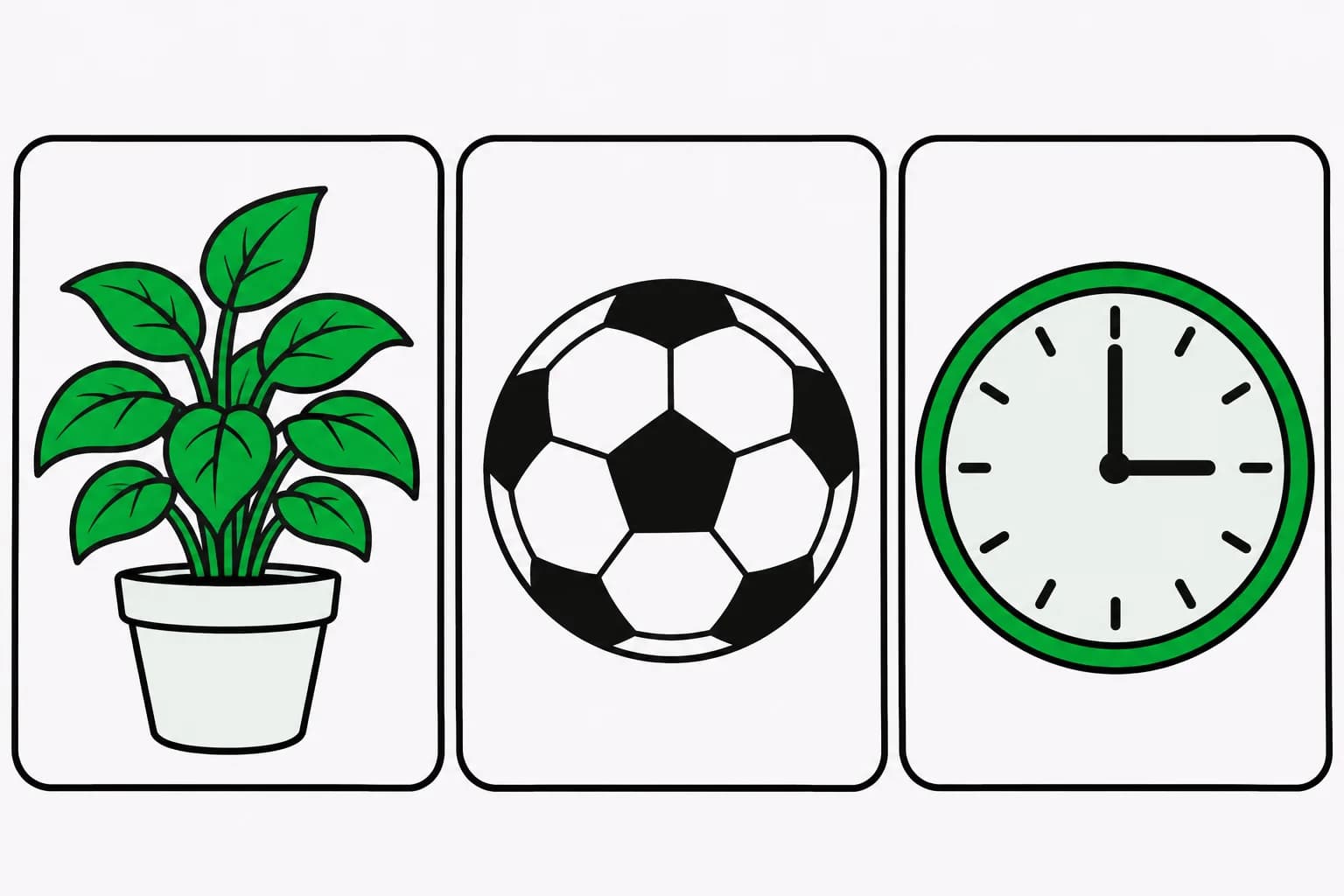
Picture ideas: a potted plant; a football; a wall clock.
Aisha has promised to water the class plant after lunch. As she reaches the classroom, a friend calls her to join a football game. She wants to play, but the plant still needs her attention. The story can follow what she decides and what that decision costs her.
Plan this: Who depends on the promise, and what makes keeping it inconvenient?
Watch for: Describing the whole football match while the promise appears only in the final sentence. Keep the responsibility and the decision central. Choosing the plant picture is enough; the other pictures are optional.
2. An unexpected kindness
Picture ideas: an umbrella; a lunchbox; an adhesive plaster.
A pupil discovers that his lunchbox is empty after a hurried morning. He feels embarrassed and tries to hide it. Another pupil notices and offers help without drawing everyone's attention. Alternatively, choose the umbrella and build a different situation around a sudden downpour.
Plan this: What makes the help unexpected, and how does the person receiving it respond?
Watch for: Listing several unrelated kind acts. Develop one encounter so the reader understands why it matters. A small, considerate action can provide enough material for a story.
3. Owning up to a mistake
Picture ideas: a cracked mug; a paintbrush; a borrowed library book.
A child damages a borrowed book while rushing to finish a craft project. Nobody has seen what happened. The difficulty is deciding whether to hide the damage or tell the person who trusted them with the book.
Plan this: What does the character fear will happen after telling the truth?
Watch for: Solving everything with “It was only a dream” or making someone else confess. Let the character take responsibility. The ending can include an apology and a practical attempt to put things right.
4. A change of plan
Picture ideas: a raincoat; a picnic basket; a noticeboard.
A family has prepared a picnic, but heavy rain changes their afternoon. One child is disappointed because they helped organise it. The story follows how the family responds and whether the child finds a way to contribute to a different activity.
Plan this: Which part of the original plan mattered most, and can the characters preserve it in another way?
Watch for: Ending immediately after the weather changes. The change creates the problem; the characters' response develops the story. Keep travel and weather description brief enough to leave space for that response.
5. A small act of courage
Picture ideas: a microphone; swimming goggles; a raised hand.
A pupil notices that the teacher has misunderstood what happened during group work. Speaking up means admitting their own part in the mistake. Courage comes from doing something difficult despite feeling worried, rather than from an enormous rescue.
Plan this: What is the character afraid of, and what helps them act anyway?
Watch for: Saying “I was brave” without showing the difficult moment. A pause, a hesitant first sentence and the decision to continue can make the change visible.
6. Working together
Picture ideas: a large poster; scattered marbles; a cardboard box.
Two classmates disagree about a poster for a class display. One wants detailed drawings; the other worries that they will run out of time. They need to listen, divide the work and make a choice together.
Plan this: What can each person contribute, and why does the task need both of them?
Watch for: Having one capable pupil complete everything while the others watch. Give the characters different useful actions. The result should follow from their cooperation, even if the finished poster is imperfect.
7. A surprise discovery
Picture ideas: an old photograph; a biscuit tin; a bookmark.
While helping to tidy a cupboard, a child finds a photograph of a grandparent doing something unexpected, such as playing in a school band. A conversation changes the child's understanding of someone they thought they knew well.
Plan this: What did the character believe before the discovery, and what changes afterwards?
Watch for: Adding secret tunnels or hidden treasure simply to make the story bigger. An ordinary discovery can be interesting when it changes a relationship or leads to a meaningful action.
8. A thoughtful gift
Picture ideas: a handmade card; a scarf; a book with a bookmark inside.
A child wants to thank someone but cannot buy the expensive present they first imagined. By remembering what the person enjoys or needs, the child chooses or makes something more personal.
Plan this: Which detail shows that the giver understands the recipient?
Watch for: Describing a shopping trip without showing the thought behind the gift. The price need not be the important part. Let the recipient's reaction connect to the detail the child noticed.
How to choose and develop one topic
Before writing, try explaining your idea aloud in three sentences: the situation, the difficult choice or problem, and the outcome. If the topic disappears from that explanation, adjust the idea now.
Next, test the picture connection. Ask, “If I removed this object, person or place, would the important events still happen in exactly the same way?” If so, give the picture a clearer role. You can change your plan instead of adding a sentence that simply names the object.
These exercises offer possible directions, not scripts. Your character may make a different decision, and an ending can include disappointment or an unresolved feeling. What matters is that the sequence makes sense and addresses the chosen topic.
Our annotated PSLE composition example shows how a complete story develops its central moment. Study the choices in the writing, then make your own.
Turn a topic into useful practice
Choose one topic and complete a brief plan before drafting. After writing, ask a reader to identify the topic and the picture without looking at the question. Their answer can reveal where the connection needs clarification; it is a practice check, not a marking formula.
Revise one important passage before starting another story. Use our PSLE composition revision guide to decide whether to work on events, explanation or language. Keeping the first draft makes it easier to see what you changed.
To continue in ExaminerIQ, open the PSLE picture-prompt catalogue after signing in and choose an available task. The online composition practice guide explains how to move from a prompt to a plan, draft and review.
Frequently asked questions
Are these real past-year PSLE composition topics?
These are original practice exercises created for this guide. They are not reproduced examination papers or predictions. Familiar themes can help you practise making a fresh story from a topic and pictures.
Must I use all three PSLE composition pictures?
The current Standard English format requires the composition to be based on at least one of the three pictures. Use more when they fit naturally, and follow the instructions on your actual paper.
Can I write a different story from the suggestion?
Yes. The suggestions show possible directions. Create different characters and events while keeping the topic clear and making meaningful use of your chosen picture.
Should I memorise a story for every topic?
Practise making choices from unfamiliar prompts. You can reuse a technique, such as showing hesitation through action, without forcing the same memorised story into different questions.
Can Primary 5 pupils use these topics?
Yes, as writing practice. A P5 pupil can begin with a short plan or one developed scene before attempting a complete story. Follow the word count and task requirements set by the pupil's teacher.
Ready to put these tips into practice?
Choose a picture prompt, plan and save your story, then review your writing in the PSLE workspace.
Related articles
PSLE Composition Practice Online: Plan, Write and Review
Explore PSLE composition practice online with picture prompts, story planning, saved drafts, revision feedback, writing skills and optional handwriting worksheets.
How to Improve PSLE Composition: 7 Practical Revision Steps
Improve PSLE composition with seven revision steps, an original before-and-after example, a short editing exercise and practical feedback tips for parents.
PSLE Composition Example: A Complete Story with Annotations
Read an original PSLE English composition example, then explore how its picture link, turning point and ending work. Includes a short writing exercise.