
PSLE Composition Example: A Complete Story with Annotations
A useful PSLE composition example shows how a writer connects the topic, a picture and a clear sequence of events. Read the complete story below first. Then use the annotations to see why the problem develops, how the main character responds and what changes by the ending.
This is an original teaching example for PSLE Standard English Continuous Writing. It is not a past examination answer, an official SEAB model or a composition awarded a particular mark. Its purpose is to make writing choices visible so that you can try the techniques in your own story.
The original practice task
Topic: An unexpected kindness
Imagine three picture choices: an umbrella, a lunchbox and an adhesive plaster. Choose a picture that can play a meaningful part in an incident about unexpected kindness. In the example, the writer chooses the lunchbox.
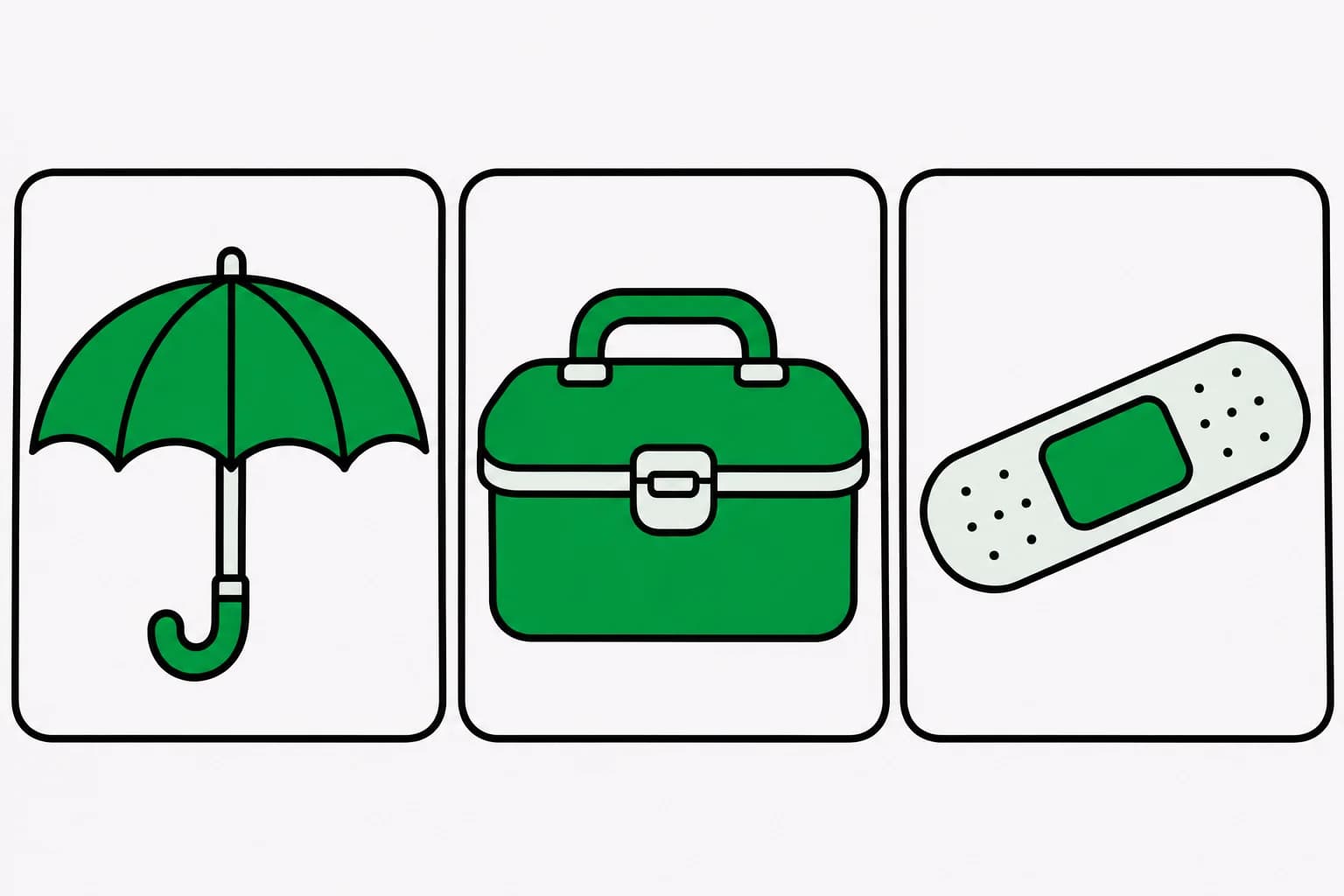
The 2026 SEAB English syllabus requires at least 150 words and use of at least one of the three provided pictures. This example develops one picture throughout the incident. Its length and paragraph structure are teaching choices, not exam requirements.
Before reading, ask: what could make an ordinary offer of food unexpected? Perhaps it comes from someone the narrator hardly knows. That creates a reason for the topic, beyond inserting the word “kindness” into the final sentence. If you need more starting points, try our original PSLE composition topics.
The empty space beside me
I pulled the zip of my school bag open for the third time. My lunchbox was still missing. In its place lay my spelling book, a crumpled worksheet and an empty plastic bag. Then I remembered the blue box sitting beside the kettle at home. I had been so busy looking for my PE shirt that I had left it behind.
Around me, chairs scraped across the canteen floor. My friends waved from the queue, but I pointed at my bag and pretended to search for something. My wallet was in the lunchbox's outer pouch. I could ask a teacher for help, yet the thought of explaining my careless morning made my face grow warm. I sat at the end of a table and opened my spelling book.
“Is this seat taken?” a voice asked. Maya, the new girl in our class, stood beside me with a green lunchbox. I shook my head. We had hardly spoken since she arrived on Monday. She opened the lid, then glanced at my book. “Are you studying through recess?” I tried to laugh. “I forgot my food.”
Maya looked at her lunch and pushed a small, clean container towards me. “Mum packed extra rice today. Would you like some?” I stared at her. I had spent the morning worrying that somebody would laugh at me. Instead, a girl whose surname I barely knew was offering to share. “Are you sure?” I asked. She nodded and passed me a spare spoon.
While we ate, Maya asked where our class kept the library books. Soon we were comparing our favourite adventure stories. When the bell rang, I noticed that I had not opened my spelling book again. “Thank you,” I said, helping her gather the containers. “You saved my recess.” Maya smiled. “You made mine less lonely.”
The next morning, I checked that my lunchbox and wallet were in my bag. At recess, I reached our usual table before my friends. When Maya appeared in the doorway, I moved my bag off the chair beside me and waved.
Story length: 343 words, excluding the title. Read it as one possible response to the practice task, rather than a script to memorise.
How the composition works, paragraph by paragraph
Paragraph 1: establish a problem that matters to the narrator
The search begins immediately. The concrete items in the bag help us picture the situation, while the memory of the lunchbox beside the kettle explains how it happened. There is no long weather description delaying the incident.
The problem is small enough to be believable in a school story. It still matters because the narrator is hungry and embarrassed. A dramatic accident is not necessary to create a reason for the character to act.
Try it: begin a new story with a character noticing a specific problem. Explain its cause when the reader needs that information.
Paragraph 2: show why the problem is not solved immediately
The wallet is also missing, so buying lunch is not an easy solution. The narrator knows a teacher could help but feels embarrassed. That choice explains the delay without pretending no adult is available.
Opening the spelling book gives the embarrassment a visible action. Readers can infer that the narrator is trying to look occupied. This is more informative than repeating “I was embarrassed” several times.
Try it: give your character a plausible obstacle or hesitation. Check that the obstacle follows from the situation rather than appearing only to make the story longer.
Paragraph 3: introduce the person who can change the situation
Maya arrives for her own reason: she needs a place to sit. Her question is ordinary and fits the setting. We then learn that she is new and that the narrator barely knows her. This prepares the “unexpected” part of the topic.
The lunchbox picture is connected to the action. It is not a decorative object mentioned once and forgotten. Maya opens it just before noticing the narrator has no food.
Try it: underline where your chosen picture first appears. Then identify what it makes possible later in the story.
Paragraph 4: develop the turning point
Maya offers food. The narrator pauses because the response differs from what they feared. That difference makes the kindness meaningful: the story has already shown the worry about being laughed at.
The dialogue stays short. “Are you sure?” expresses uncertainty naturally, while the spare spoon makes the offer practical. The paragraph gives space to the important moment instead of rushing from problem to solution in one sentence.
Try it: find your turning point. Add the character's reaction and one relevant action before moving to the outcome.
Paragraph 5: show a consequence beyond the immediate solution
Eating solves the hunger, but the conversation creates a connection. The detail about the spelling book recalls the narrator's earlier attempt to hide. They no longer need that pretence.
Maya's final line gives the exchange another perspective. She helped someone who had forgotten lunch; she also gained company. The two characters benefit in different ways, which gives the incident more development than a simple thank-you and goodbye.
Try it: ask what changes in the relationship, understanding or behaviour after the problem is resolved.
Paragraph 6: end with a changed action
The narrator remembers their belongings the next morning, closing the practical part of the problem. Saving Maya a seat then shows a change in how they treat her. The ending returns to the table and the empty seat from earlier in the story.
There is no separate paragraph announcing a universal moral. A specific action can express what a character has learnt. You can use a reflective sentence when it adds something, but it should grow out of the incident.
Try it: write an ending in which your character does one thing differently. Make sure the reader can connect that action to the story's events.
How to learn from a model composition
First, close the story and retell its sequence in a few sentences. Can you explain what the narrator wants, what gets in the way, what Maya does and what changes? If the chain is clear, turn it into notes using our worked composition planner.
Next, borrow one technique rather than the whole plot. For example, show embarrassment through an action, or end by returning to an earlier object. Use a different setting and problem so that you practise making your own decisions.
Finally, read your draft against the task. A polished story can still miss the topic. The PSLE composition revision guide gives an order for checking relevance, development and language before you rewrite.
A short exercise: make the kindness visible
Start with this plain sentence:
The girl was kind and helped me, so I felt better.
Replace it with two or three sentences that show what the girl does, what the narrator notices and how the narrator responds. Do not add a new emergency or a list of impressive adjectives.
One possible revision is:
Maya slid the small container across the table and placed a spoon beside it. I looked up from the book I had been pretending to read. “Thank you,” I said, making room for her lunchbox.
The revision names the helpful action and links it to the narrator's earlier behaviour. It does not need to explain every feeling. Your version can use different details as long as the action and reaction remain clear.
For another model, open the ExaminerIQ PSLE Story Library after signing in. Read the technique notes, then try one idea in your own writing. Our online composition practice guide explains how to move from a picture task to a saved draft and review.
Frequently asked questions
Is this an official PSLE model composition?
No. It is an original ExaminerIQ teaching example, written to demonstrate story choices. It has not been marked by SEAB and does not carry a promised grade.
Should I memorise a PSLE composition example?
Study how the writer connects events, develops a turning point and uses the chosen picture. Practise those techniques with new topics. A memorised plot may not answer the task you actually receive.
Does every composition need six paragraphs?
No. This story uses six because they suit its sequence and changes of focus. Paragraph breaks should help the reader follow the incident, dialogue and movement in time.
Is 343 words the length I should aim for?
No. It is the length of this teaching example, not a prescribed target. Develop the task clearly and leave time to check your work; making a story longer does not automatically make it better.
How can a parent discuss the example without rewriting the child's work?
Ask the child to explain one writing choice and try it in a new sentence. For example: “Which action shows the narrator is embarrassed?” Then invite a similar choice in the child's own situation, using their own words.
Ready to put these tips into practice?
Choose a picture prompt, plan and save your story, then review your writing in the PSLE workspace.
Related articles
PSLE Composition Practice Online: Plan, Write and Review
Explore PSLE composition practice online with picture prompts, story planning, saved drafts, revision feedback, writing skills and optional handwriting worksheets.
How to Improve PSLE Composition: 7 Practical Revision Steps
Improve PSLE composition with seven revision steps, an original before-and-after example, a short editing exercise and practical feedback tips for parents.

How to Plan a PSLE Composition: A Worked Story Plan
Learn how to plan a PSLE composition with a complete example: choose a picture, build a problem, organise the action and write an ending that follows.